
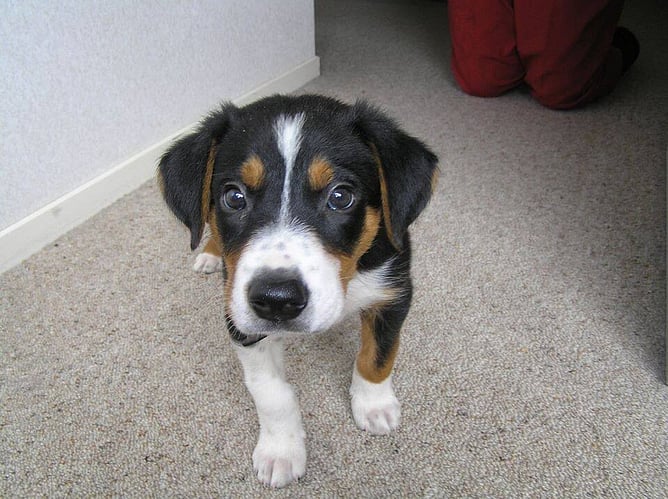
What I wish I knew when I got my first dog
What I Wish Someone Had Told Me Before I Got My First Dog
I talk to a lot of people who are frustrated with their dog. Not because they don't love them — they clearly do — but because things aren't working the way they hoped, and nobody told them what to expect.
So here's what I wish someone had told me, and what I now try to tell every person who comes through my door.
Training starts the moment you bring them home
Not when they're six months old. Not when they've 'settled in.' From day one, your dog is learning what works. What gets them attention. What gets them food. What gets them outside.
If jumping up gets a reaction — even a negative one — jumping is worth trying again. If barking makes you get up and let them out, barking works. They're not being difficult. They're being efficient.
Start as you mean to go on. Reward what you want. Manage what you don't. The habits that form in the first weeks are the ones you'll be working with for years.
The socialisation window is shorter than you think and not what you think
Puppies have a developmental window — roughly up to 16 weeks — where they're most open to new experiences. During this period, new things are interesting. After it closes, new things start to feel more suspicious.
This doesn't mean you can't introduce new things after 16 weeks. You can, and you should. But it gets harder. Positive early experiences with a wide range of people, animals, environments, and surfaces pay dividends for years.
If you have a puppy, get them out even if it means carrying them. Carefully, positively, at their pace — but get them out. Introduce novelty and make novelty fun
Your dog is not giving you a hard time. They're having a hard time.
Misbehaviour is information on where their head is at and what they know
This is the reframe that changes everything for most people I work with.
When a dog is barking, lunging, refusing to come back, stealing food, chewing things, jumping on people — they're not doing it to wind you up. They're doing it because it's working, or because they're overwhelmed, or because nobody has shown them a better option yet.
Approaching behaviour from that place — curiosity instead of frustration — doesn't mean you accept everything. It means you look for the reason instead of just reacting to the behaviour, which puts you in a much better position to actually change it. It also means changing the foundation that is causing the behaviour by reshaping into what you want using fun
Training is not a phase. It's a relationship.
The people who get the most out of working with their dogs are the ones who stop thinking of training as a task to complete and start thinking of it as an ongoing conversation.
You don't finish training your dog at twelve weeks. Or after a six-week course. You keep communicating, keep rewarding what you like, keep adjusting as life changes. The dog keeps learning — the question is just what they're learning.
When the relationship is strong, the individual behaviours take care of themselves more easily. That's what I'm trying to build with every dog and owner I work with.
You don't have to figure it out alone
I spent longer than I needed to struggling with my first difficult dog because I thought I should be able to work it out myself. I know a lot of people feel the same way. I thought it was just my dog and me and that I was doing things wrong.
Asking for help isn't an admission that you've failed. It's just the fastest way to get from where you are to where you want to be.
If you're stuck, message me. Even just a conversation about what's going on can point you in the right direction.